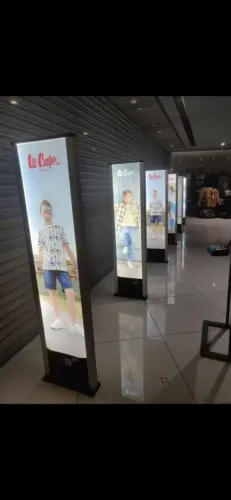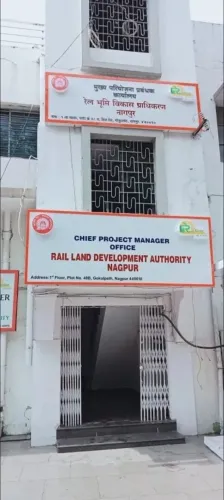
A finished LED sign may appear simple from the outside, but its performance depends on several coordinated stages. Design accuracy, material selection, electrical planning, fabrication, finishing, and installation all influence how the sign looks and how reliably it operates.
Understanding the LED Signage Manufacturing process can help business owners and marketing teams evaluate quotations more effectively. It also reduces the risk of approving a sign based only on a digital design without considering its physical construction.
The Process Begins With the Site
Before production starts, the signage location should be examined. Manufacturers need accurate dimensions, photographs, viewing angles, mounting details, and information about existing electrical access.
A site survey may identify:
- Available façade area
- Obstructions or projections
- Structural support requirements
- Sign visibility from different directions
- Nearby electrical points
- Maintenance access
- Exposure to rain, dust, and direct sunlight
In a busy Nagpur market, the board may need to remain readable among several competing signs. On a larger commercial building, its scale must suit the façade and the distance from which it will be seen.
Converting Brand Artwork Into a Fabrication Design
A logo designed for a brochure cannot always be reproduced exactly as an illuminated sign. Very thin lines, small lettering, complex gradients, and closely spaced elements may be difficult to fabricate or illuminate evenly.
The artwork is therefore converted into a production-ready drawing. This drawing defines dimensions, letter depth, material type, lighting method, colour, mounting points, and electrical routing.
Experienced fabricators preserve the original brand identity while making practical adjustments for visibility and construction.
Selecting the Sign Materials
The intended application determines the material combination. Acrylic is commonly used for illuminated faces because it can transmit and diffuse light. Aluminium, stainless steel, and other sheet materials may be used for letter returns, backs, frames, or decorative finishes.
ACP can form the background or complete façade band. Vinyl graphics may be used for secondary details where illumination is unnecessary.
Material decisions should consider:
- Indoor or outdoor placement
- Board dimensions
- Required finish
- Weight limitations
- Heat and weather exposure
- Lighting design
- Planned service life
Exterior signage requires weather-suitable materials, sealed electrical components, and properly treated metalwork.
Letter and Structure Fabrication
Once the design is approved, letters and panels are cut using appropriate machinery. Depending on the design, this may involve CNC routing, laser cutting, bending, welding, bonding, or assembling fabricated returns.
The supporting frame must remain level and strong enough to carry the sign safely. Poor fabrication can result in uneven letters, visible joints, warped surfaces, or misalignment after installation.
Edges and corners should be finished carefully because these details affect both appearance and durability.
Installing the LED System
LED modules are arranged according to letter depth and face area. Their placement should distribute light evenly without creating visible hotspots.
The electrical stage includes:
- Calculating the total lighting load
- Selecting compatible power supplies
- Planning wire routes
- Insulating connections
- Providing ventilation where required
- Protecting components from moisture
- Testing brightness and colour consistency
A sign can look correct in daylight yet reveal uneven lighting at night. Testing in a darker environment before dispatch helps identify these issues.
Finishing and Quality Checks
Before installation, the complete sign should be inspected for surface damage, colour variation, loose connections, sharp edges, and lighting inconsistencies.
Measurements should be checked against the approved drawing. Individual components may also be labelled when a large sign must be assembled at the site.
A proper quality check covers both appearance and function. It should confirm that the lighting remains stable, the structure is aligned, and the visible surfaces are clean.
Installation at the Business Location
Installation teams position the frame, mount the letters or panels, complete electrical connections, and test the sign from relevant viewing points. Safe fixing is particularly important for signs installed at height or exposed to wind.
O D SERVICES INC supports commercial signage requirements in Nagpur through coordinated design, production, and installation planning. For business owners, reviewing material specifications and fabrication drawings before manufacturing provides greater clarity than relying solely on a visual mock-up.
LED signage manufacturing is ultimately a combination of branding and engineering. When every stage is handled carefully, the result is a sign that represents the business clearly, performs consistently, and fits its location naturally.
Keywords